
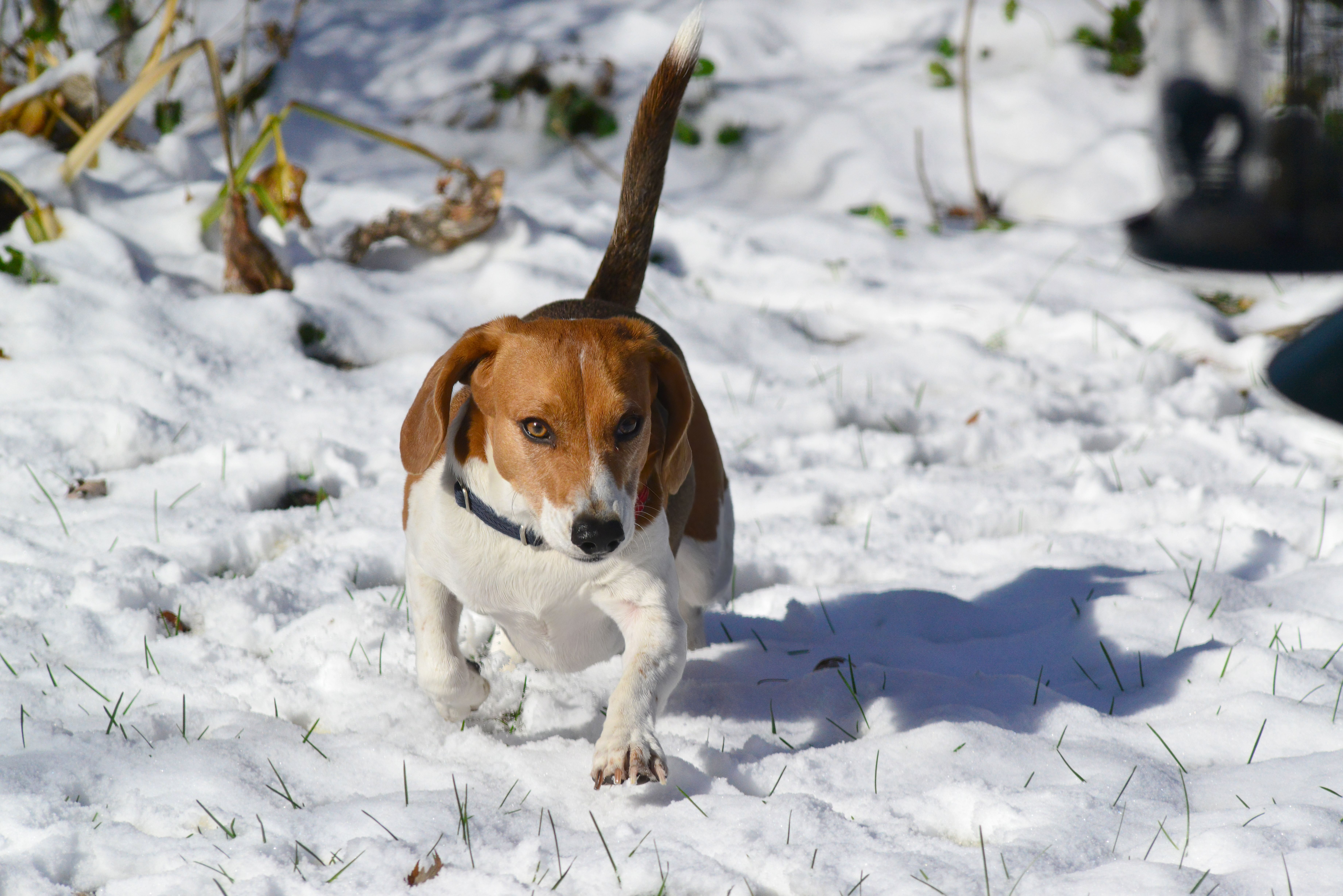
Most healthy dogs are comfortable outdoors when temperatures stay above 45°F. Below 32°F, small, short-coated, senior, and very young dogs need shorter walks and extra protection. Below 20°F, every dog faces a real risk of hypothermia and frostbite, so keep walks brief or skip them.
There is no single number that fits every dog. Size, coat, age, and health all change how quickly a dog loses body heat.
These general ranges help most Oklahoma dog owners plan a December walk.
Tulsa winters swing quickly. A sunny 50°F afternoon can drop below freezing after dark, so check the forecast for the time you actually plan to walk.
Yes. Wind strips warm air away from your dog's body, so the "feels like" temperature matters more than the thermometer reading.
Oklahoma's open landscape makes wind a major factor in winter. A 30°F day with a steady north wind can feel closer to the high teens. The National Weather Service wind chill chart shows how quickly that difference adds up.
Moisture matters too. Rain, sleet, and wet snow soak through fur and pull heat away much faster than dry cold.
Some dogs reach their limit long before others. These dogs need extra protection when temperatures fall.
Thick double-coated breeds like Huskies, Malamutes, and Great Pyrenees handle cold far better. Even so, they still need shelter, water, and protection from extreme conditions.
Hypothermia happens when a dog's body temperature drops below its normal range of roughly 101°F to 102.5°F. Mild hypothermia begins at about 99°F and can progress quickly.
Watch for these warning signs during or after a cold walk.
Shivering that stops while your dog still seems cold is a serious sign. It can mean the body is too cold to keep shivering.
If you notice early signs, bring your dog inside, wrap them in warm (not hot) blankets, and call a veterinarian. Avoid heating pads or hot water, which can burn chilled skin.
Yes. Frostbite is less common in Oklahoma than in northern states, but our winter cold snaps and ice storms can bring temperatures low enough to cause it.
Frostbite most often affects the ears, tail tip, paw pads, and scrotum. Look for these signs.
Never rub frostbitten skin. Warm the area gently and contact a veterinarian, since the full extent of damage may not show for several days.
Most dogs still need daily exercise in winter. A few simple adjustments make cold weather walks safer.
The cold itself is only part of the risk. Several common winter products can be dangerous to dogs.
If you think your dog swallowed antifreeze or another toxin, call a veterinarian right away. The ASPCA Animal Poison Control Center is another helpful resource. The American Veterinary Medical Association also offers cold weather safety guidance for pet owners.
Seek emergency veterinary care right away if your dog shows any of the following.
The emergency team at Oklahoma Veterinary Specialists in Tulsa is available 24 hours a day, 7 days a week, 365 days a year. No appointment is needed for emergencies, including nights, weekends, and holidays.
Our emergency veterinarians can provide warming support, fluid therapy, bloodwork, and close monitoring. They also work alongside board-certified specialists under one roof when a case needs more advanced care.
Yes. A dog that suddenly seems colder than usual may have an underlying health issue worth investigating.
Hypothyroidism, heart disease, kidney disease, and other chronic conditions can affect how well a dog regulates body temperature. Arthritis and orthopedic problems often worsen in cold weather and can make walks painful.
Your primary care veterinarian is the best first stop for these concerns. When a case calls for advanced diagnostics or treatment, they may refer your dog to the board-certified Internal Medicine or Surgery specialists at Oklahoma Veterinary Specialists. We work as a partner to your family veterinarian, sharing findings and coordinating care so your dog's treatment stays seamless.
Learn more about what board certification means in The Board-Certified Difference.
Oklahoma Veterinary Specialists delivers 24-hour emergency care and board-certified specialty services with advanced technology and compassionate treatment.


